
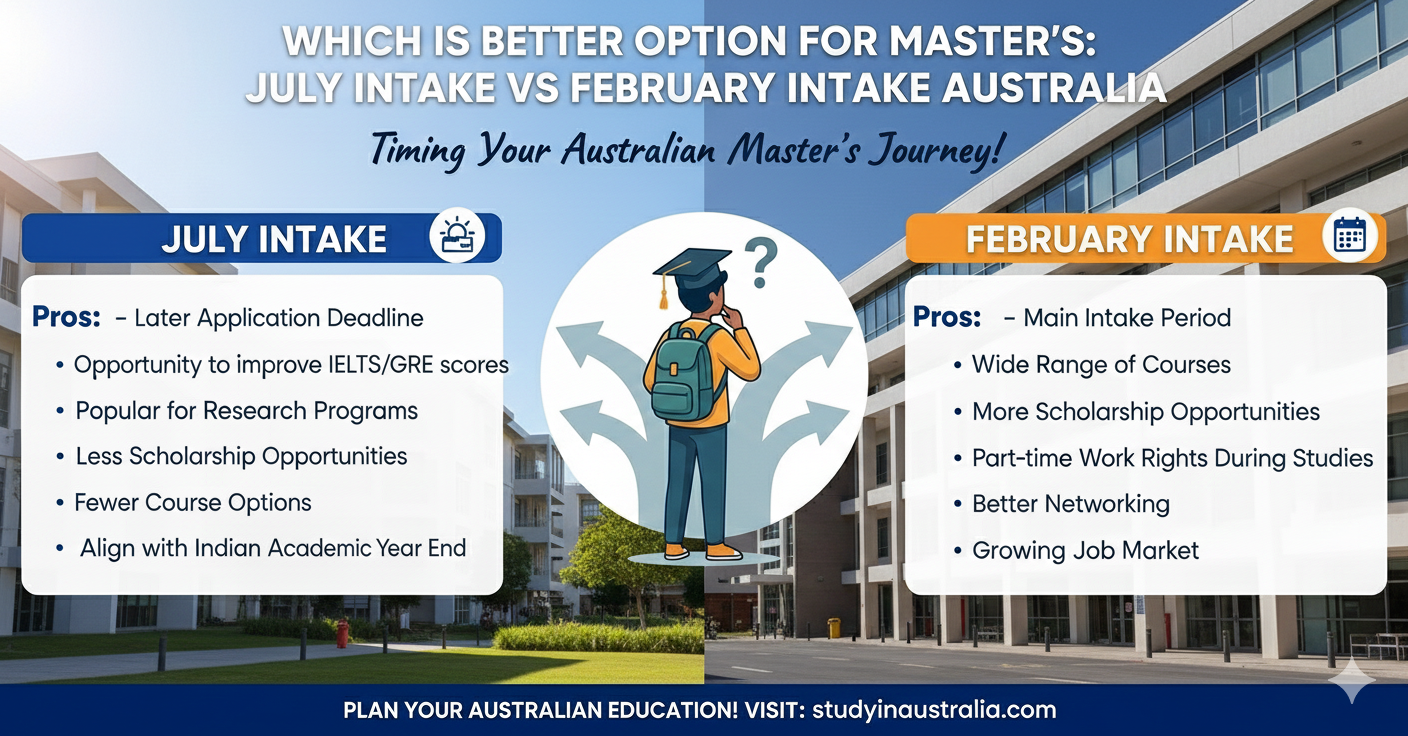
Indian students lining up for masters or even undergrad in Australia almost always narrow it down to the two main intakes February (that’s Semester 1) and July (Semester 2). Both are proper, but February feels like the main event with way more on the table, while July’s handy as that mid-year option if you need a bit longer to get ready. As education consultants sorting Australian applications, we see it really comes down to what courses are open, how tough the competition is, and where you are in your own prep. Let me walk through the key stuff plainly.
What Courses You Can Actually Get
February pretty much throws everything open nearly all bachelor’s, masters, diplomas at public and private unis. Engineering, business, IT, nursing, data science, whatever you name it, it’s there.
July keeps it smaller. You’ll find mostly masters, some undergrad, often specific ones or continuations. Not every uni or program bothers with July starts, so choices feel tighter.
If you want the biggest pick, February takes it hands down.
How Much of a Fight It Is to Get In
February brings the crowds loads more applicants, popular masters fill quick, competition ramps up.
July’s much calmer, fewer people going for it, easier to land a spot, processing moves faster. Real lifesaver if February deadlines passed you by.
The Weather When You First Arrive
Coming in February means the end of Aussie summer, still warm, sunny, easy to settle before it cools into autumn.
July drops you in mid-winter chilly, rainy especially down south like Melbourne or Sydney, but spring kicks in soon after.
Both fine really, but February probably edges for that warmer hello.
How Long It Takes and Job Stuff After
Courses run the same length whichever, masters usually 1-2 years.
February lines up nicer for graduating into peak summer hiring season, full round of campus events, societies.
July grads hit mid-year recruitment waves, still plenty going on.
Post-study work visa is the same either way up to 4 years for masters depending on course and city.
Money Side and Scholarships
Fees don’t change much between intakes, living costs similar wherever.
February tends to have more scholarships floating around, government ones, uni-specific, often linked to the main semester.
July gets fewer funding bits, though sometimes little extras to pull students.
So Which One Gives You More in the End?
February fits the bill for most Indian students, biggest course range, better shot at scholarships, proper full academic year, timing works well for jobs. It’s the go-to primary pick.
July comes into its own if you missed February cut-offs, need time for IELTS or funds, or just fancy less hassle means no full-year wait.
No bad choice, but February usually opens wider doors overall.
Dates move a touch each year, always check the uni directly. If July’s your thing, study with July intake 2026 Australia by getting apps in early 2026. For February, apply with February intake 2026 Australia, deadlines often late 2025. Hit official uni pages for the exact 2026 info. Pick whatever lines up with where you are and what you want long-term.