
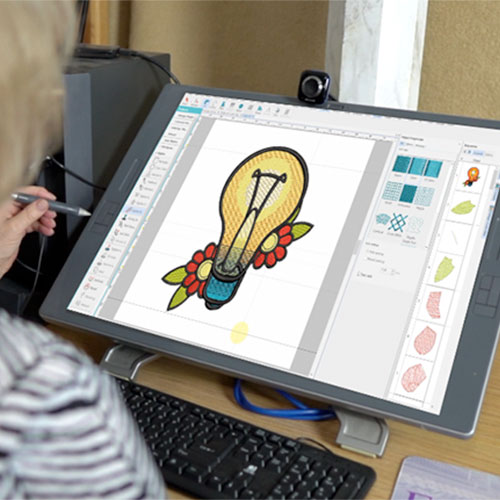
Let’s talk about a silent budget killer in your embroidery operation: wasted thread. It’s not just the extra clippings in the trash bin. It’s the unseen excess in every design—the inefficient stitch paths, the overly dense fills, the unnecessary trims and jumps that add up with every single stitch. The true key to controlling this waste isn’t at the machine during production; it’s in the digital blueprint created long before the needle pierces the fabric. This is where investing in professional Embroidery Digitizing Services makes all the difference, transforming your designs from thread-hungry monsters into models of efficient, cost-effective production.
The Hidden Cost of Inefficient Digitizing
You might see digitizing as a simple conversion from image to stitches, but it’s actually a complex engineering process. A poorly digitized file doesn’t just look bad; it actively burns through your resources.
-
Excessive Stitch Count: The most direct thief. Unnecessary density in fill areas or outlines padded with extra stitches consumes more thread and dramatically increases machine run time.
-
Inefficient Stitch Paths: Imagine a delivery driver taking a chaotic, back-and-forth route across town instead of a smooth, logical path. A digitized design with poor sequencing does the same, leading to constant thread trims, long jumps the machine still sews (wasting bobbin thread), and needless needle penetrations.
-
Thread Breaks and Rework: Poor compensation settings, incorrect pull-push, or awkward stitch angles cause thread breaks, bird-nesting, and misaligned designs. Every break means stopping the machine, re-threading, and often starting the design over—wasting the thread already used and valuable production time.
-
Premature Wear and Tear: An inefficient design forces your machine to work harder. Constant direction changes, high-density stitching, and frequent trims accelerate wear on needles, hooks, and other mechanical parts, leading to more frequent and costly maintenance.
Smart digitizing directly attacks each of these points, turning saved thread into saved money.
The Principles of Thread-Smart Digitizing
So, what separates a wasteful digitizing file from a smart one? It boils down to technique and expertise. Here are the core principles professionals use to build economy into every design.
1. Strategic Stitch Sequencing and Pathing
A smart digitizer plans the stitch order like a master strategist. The goal is to create one continuous, logical sewing path wherever possible. This technique minimizes the number of trims and jumps. By sewing neighboring sections in sequence, the machine can travel from one area to the next with a simple “running stitch” (often sewn as a very short stitch length that blends in or is trimmed later) instead of cutting the thread and jumping. Fewer trims mean less thread wasted on tie-offs and a faster overall sew time.
2. Right-Sizing Your Stitch Density
More stitches do not always mean a better-looking design. In fact, overly dense fills can make designs stiff, cause puckering, and hide details. A skilled digitizer assigns the minimum density needed for clean, solid coverage on the specific target fabric. Reducing fill density by even 10-20% can result in massive thread savings over hundreds of garments without sacrificing quality. They use techniques like optimizing stitch angles and using tatami or gradient fills to cover space efficiently.
3. Mastering Underlay
Underlay is the foundation of embroidery. Proper underlay stabilizes the fabric, prevents puckering, and defines sharp borders for top stitches. When executed correctly, it allows the digitizer to use a lower density in the top stitches because the foundation is secure. Skipping or poorly planning underlay forces the use of heavier, denser top stitching to achieve stability—a far less efficient use of thread.
4. Intelligent Pull Compensation and Path Offsets
Fabric isn’t static; it pushes and pulls under the tension of stitches. Pull compensation is a setting that accounts for this by slightly widening columns and fills so they sew to their intended visual size. Perfecting this setting prevents gaps between sections that might require a second outline stitch to cover, which adds unnecessary stitches. Similarly, precise path offsets for satin borders ensure clean edges without needing extra reinforcement stitches.
The Tangible Payoff: From Saved Thread to Saved Dollars
Implementing smart digitizing isn’t an abstract concept—it hits your bottom line in concrete ways.
-
Direct Material Savings: Less thread used per design means you run fewer cones and pre-wound bobbins. This saving compounds across every single item you produce.
-
Faster Production Times: Efficient stitch paths and lower stitch counts mean designs sew out faster. You complete more jobs per day with the same machine time, boosting your capacity and revenue potential without new equipment.
-
Reduced Downtime: Designs optimized for smooth running dramatically decrease thread breaks, re-threading, and rework. Your machines spend more time sewing and less time paused for fixes.
-
Longer Machine Life: Smoother sewing puts less stress on components. You’ll see reduced frequency of repairs and part replacements, lowering your maintenance budget.
-
Consistently Higher Quality: Efficient designs are typically cleaner, puffier, and more professional. This enhances your brand reputation and reduces customer complaints or rejected goods—another costly form of waste.
Making the Smart Choice for Your Business
You have two paths: develop this high-level digitizing expertise in-house or partner with a specialist. For most businesses, outsourcing to a dedicated Embroidery Digitizing Services provider is the most cost-effective route. You gain immediate access to experts whose sole focus is creating the most efficient, high-quality files. They have the advanced software and deep technical knowledge to optimize every element of a design you send them.
When choosing a partner, don’t just ask about price per design. Ask about their process. Do they optimize for stitch reduction and efficient pathing? Will they adjust settings for your specific fabric and thread? A true partner in smart digitizing will be eager to explain how their work saves you money beyond the initial conversion fee.
Conclusion: The Smartest Stitch is the One You Don’t Sew
In embroidery, true efficiency is achieved long before the production run begins. By prioritizing smart, thoughtful digitizing, you stop managing waste and start maximizing profit. The goal shifts from simply getting a design to sew out to engineering that design for peak performance and minimal resource consumption. The thread you save, the time you reclaim, and the headaches you avoid translate directly into a healthier, more competitive, and more profitable business. Stop letting inefficient files quietly drain your resources. Invest in smart digitizing, and watch those savings stitch themselves directly back to your bottom line.