
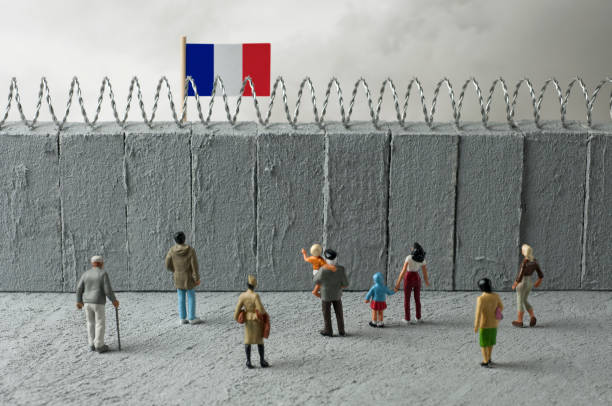
The concept of home is often tied to a specific patch of earth, a familiar language, and a predictable social order. However, for those living under the shadow of authoritarianism, home eventually becomes a site of unbearable tension. Political displacement is never just a physical journey across a map or the crossing of a legal boundary. It is a violent severance of the self from its foundations. When an individual flees a totalizing government, they do not leave the regime behind at the border; they carry its influence in their psyche. Exile catalyzes a profound psychological transformation, forcing a reconstruction of identity that is both agonizing and revolutionary.
Concept of the “Borderline” Self
Exile begins with a catalyst of fear. The regime dictates who is a citizen and who is an enemy of the state. To survive, many must abandon their belongings, their status, and their history. This exodus creates what can be termed a “borderline” self. This identity exists in a permanent state of transition. The exile is no longer a functional part of their homeland, yet they are not fully integrated into their new environment. In this liminal space, the regime acts as the architect of displacement. By making the homeland uninhabitable it forces the individual into a void where the first cracks in identity appear.
The transition from a resident to a refugee is a traumatic shift. In the home country, identity is often defined by community, family lineage, and profession. Crossing the border strips away these external markers. In a new land, the exile is usually reduced to a statistic, a case number, or a political trope. This reductionism is the first major hurdle in the journey of identity reconstruction. The individual must navigate the external pressures of a foreign society while processing the internal trauma of loss. This “borderline” state is rarely temporary; it becomes a fundamental, permanent part of who they are.
Trauma of Severance and Internalized Control
Identity is deeply rooted in place and language. When a regime forces a person out, they lose their anchor. The loss of “place” is more than just losing a house; it is the loss of the sensory landscape that informs the subconscious. The regime compounds this by attempting to erase the exile’s history. They may brand the departed as traitors or non-persons. This official erasure aims to make the exile feel irrelevant and forgotten. The weight of this absence creates a “phantom limb” sensation, where the individual feels the pull of a country that no longer exists as they remember it.
The struggle to maintain a sense of self becomes an uphill battle against silence. While navigating these complexities, many turn to literature to find a mirror for their experiences. A profound exploration of this struggle can be found in the themes of the Beneath the Regime, Beyond the Fear Book, which captures the chilling reality of maintaining one’s humanity when the state demands total submission. This narrative underscores how the psychological scars of surveillance and social control do not vanish at the border. Instead, they follow the exile, shaping their interactions with the new world and their perception of freedom. The book highlights that the regime’s power lies in its ability to instill a persistent, internalized fear that survives even in a free society.
Life in the “In-Between” (Liminality)
Exile creates a state of liminality, a persistent “in-betweenness.” This is the space of the hyphenated identity. An exile is often caught between their native soul and their new, forced persona. Language becomes a primary battlefield in this struggle. Expressing deep emotions in a foreign tongue feels like wearing clothes that do not fit. The nuances of one’s upbringing, the idioms of the heart, are often lost in translation. This linguistic barrier can lead to a sense of isolation even in a crowded city. The exile feels misunderstood by their new neighbors and increasingly disconnected from their peers back home.
There is also the heavy burden of representation. Exiles are often expected to act as spokespeople for their entire nation. They are asked to explain the complexities of a regime they barely escaped. This pressure can be suffocating, as it prevents the individual from simply being themselves. They become a symbol of a cause rather than a person with unique, mundane desires. This external expectation further complicates the internal search for a cohesive identity. They are forced to perform their trauma for an audience that may not fully understand the cost.
Memory as both Refuge and Burden
Memory functions as a dual-edged sword in the life of the displaced. For the exile, memory preserves cultural identity. Songs, rituals, and stories become tools of survival that provide continuity when geography fails. They are the bricks used to build an internal home. However, memory also intensifies the pain of the present. Detailed recollections of home highlight the injustice of the current absence. In the context of the regime, memory anchors identity across borders, allowing the individual to remain connected to their truth.
Yet, memory is notoriously selective and unreliable. Over time, the image of the homeland begins to evolve. It becomes an “imagined country,” idealized or darkened by the trauma of the escape. This transformation affects how identity is performed and remembered. Belonging becomes something that is thought about rather than something that is lived. Therefore, identity is sustained through narrative, the stories we tell ourselves about who we were, rather than through the physical reality of a place.
Reach of Authoritarian Power
One of the most terrifying aspects of living beneath a regime is that the regime’s influence extends beyond national territory. Exile does not fully sever the ties of control. Instead, the mechanisms of surveillance adapt. The individual carries the “eyes” of the state within them. This self-surveillance shapes identity profoundly. The exiled self learns to be cautious even in a democracy. They may hesitate to speak their mind or join political movements out of fear for family still trapped at home.
Public and private identities diverge as a necessary survival strategy. This divergence makes authenticity a risky and difficult goal. The regime’s power persists through psychological conditioning that has been ingrained over decades. Thus, identity remains entangled with the history of oppression. Even across borders, the self is shaped by the ghost of past control, making the journey toward true psychological freedom a long and arduous one.
Process of Reconstruction
Despite the fragmentation and the persistent fear, exile enables a radical reconstruction of the self. Distance from the homeland allows for a perspective that was impossible while living under the thumb of the regime. Characters and real-life exiles alike begin to question the identities that were imposed upon them by the state. They recognize how power shaped their former values and fears. This awareness creates a vital space for resistance.
Reconstruction is never a linear process. It involves a painful redefinition of values, beliefs, and loyalties. Exile forces individuals to choose what parts of their culture to preserve and what parts of their trauma to leave behind. Through this process, a transnational identity emerges. This identity is not rooted in a single flag or a single piece of land. Instead, it draws its strength from adaptability and the ability to bridge different worlds. Resistance becomes embedded in how the individual defines themselves. Simply surviving and flourishing becomes an act of defiance.
Final Synthesis: The Global Citizen
Ultimately, the experience of exile leads to the emergence of a “global citizen.” Identity is not lost in the crossing; it is expanded through the fire of hardship. The pain of displacement creates a unique clarity. The exile can see the flaws in both their home regime and their host society with objective eyes. This perspective is a valuable contribution to the global conversation on human rights and freedom.
The synthesis of these experiences creates a resilient spirit. The exile learns to navigate multiple worlds, translating the human experience across borders. This expanded identity is a testament to the strength of the human will. The regime may have controlled the land and the laws, but it could not control the evolution of the spirit. The border, once a symbol of painful separation, eventually becomes a site of growth and new beginnings.
Conclusion
The narrative of displacement reveals that identity is dynamic rather than static. Beneath the regime, the self is suppressed, but across the border, it is forced to reinvent itself. While the regime attempts to crush the individual through fear and erasure, the exile finds ways to rebuild. Through the careful preservation of memory, the creation of new communities, and the act of storytelling, they create a self that is stronger and more complex than the one they left behind. The shadow of the regime may linger for a lifetime, but the light of the reconstructed, free identity eventually becomes the dominant force. Exile is a testament to the fact that while a government can displace a body, it can never truly own the soul.