
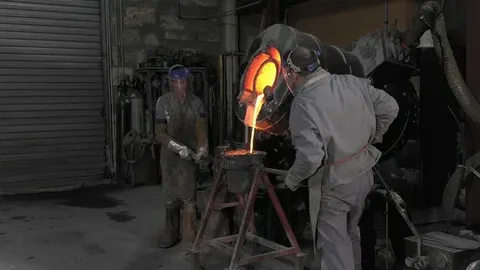
Metal casting has been a cornerstone of industrial and artistic manufacturing for centuries, and among the various materials used, bronze holds a special place due to its strength, durability, and corrosion resistance. Bronze casting is widely valued for its ability to produce high-quality components with excellent mechanical properties and fine surface finishes. Today, modern bronze casting services combine traditional foundry techniques with advanced technology to meet the demands of industrial, architectural, and decorative applications.
Understanding Bronze Casting
Bronze casting is the process of melting bronze—an alloy primarily composed of copper and tin—and pouring it into prepared molds to create solid components. This method allows manufacturers to produce complex shapes, intricate details, and components with consistent structural integrity. Bronze is known for its excellent wear resistance, low friction, and resistance to corrosion, making it an ideal material for components exposed to harsh environments or heavy usage. These properties have made bronze casting a preferred solution across industries ranging from marine and construction to electrical and mechanical engineering.
Importance of Bronze Casting Services
Professional bronze casting services play a vital role in ensuring the quality, precision, and reliability of cast components. These services cover the complete production cycle, including mold design, alloy selection, melting, pouring, finishing, and quality inspection. By working with experienced casting providers, clients benefit from accurate dimensions, smooth finishes, and consistent performance. Modern bronze casting services are capable of handling both small custom orders and large-scale production, making them suitable for a wide range of industrial and commercial projects.
Applications of Bronze Castings
Bronze cast components are widely used in applications where strength, durability, and resistance to corrosion are essential. In industrial machinery, bronze castings are commonly used for bearings, bushings, gears, and pump components due to their low friction and wear-resistant properties. In the construction and architectural sector, bronze casting is used for decorative fixtures, railings, door hardware, and ornamental elements. Marine industries rely heavily on bronze castings for propellers, valves, and fittings because of their excellent resistance to seawater corrosion. These diverse applications highlight the versatility of professional bronze casting services.
Advantages of Bronze Casting
One of the main advantages of bronze casting is its exceptional durability and long service life. Bronze components perform well under high loads and continuous motion, making them suitable for demanding mechanical applications. Additionally, bronze offers excellent thermal and electrical conductivity, which is beneficial for electrical and industrial uses. The casting process also allows for complex designs and fine detailing, making bronze ideal for both functional and decorative products. With professional bronze casting services, manufacturers can achieve high precision while maintaining cost efficiency.
Custom Bronze Casting Solutions
Many industries require components tailored to specific designs, dimensions, or performance requirements. Custom bronze casting services provide flexible solutions that meet these unique needs. Clients can specify alloy composition, size, shape, and finishing requirements to ensure the final product aligns with their application. Custom bronze castings are particularly valuable in restoration projects, specialized machinery, and architectural designs where standard components may not be suitable. Skilled foundries ensure that each custom piece meets strict quality and performance standards.
Quality Control in Bronze Casting Services
Quality assurance is a critical aspect of professional bronze casting services. Each stage of the casting process is carefully monitored to ensure consistency and reliability. This includes testing the alloy composition, inspecting molds, controlling pouring temperatures, and performing final inspections on finished components. Advanced testing methods help identify defects and ensure the mechanical strength and dimensional accuracy of bronze castings. Strict quality control not only improves product performance but also reduces maintenance costs and extends the lifespan of the components.
Bronze Casting in Modern Manufacturing
Despite advances in modern fabrication techniques, bronze casting continues to be a preferred manufacturing method due to its versatility and proven reliability. Industries increasingly rely on professional bronze casting services to produce components that combine strength, functionality, and aesthetic appeal. With advancements in casting technology, modern bronze foundries can achieve tighter tolerances, improved surface finishes, and more efficient production processes, ensuring that bronze remains a relevant and valuable material in today’s industrial landscape.
Conclusion
In conclusion, bronze casting remains an essential manufacturing process that supports a wide range of industrial, architectural, and decorative applications. With its superior strength, corrosion resistance, and design flexibility, bronze is a material of choice for demanding environments. Professional bronze casting services ensure high-quality production, precise customization, and consistent performance across all applications. By partnering with experienced casting providers, businesses can access durable and reliable bronze components that meet modern industry standards and long-term performance expectations.